
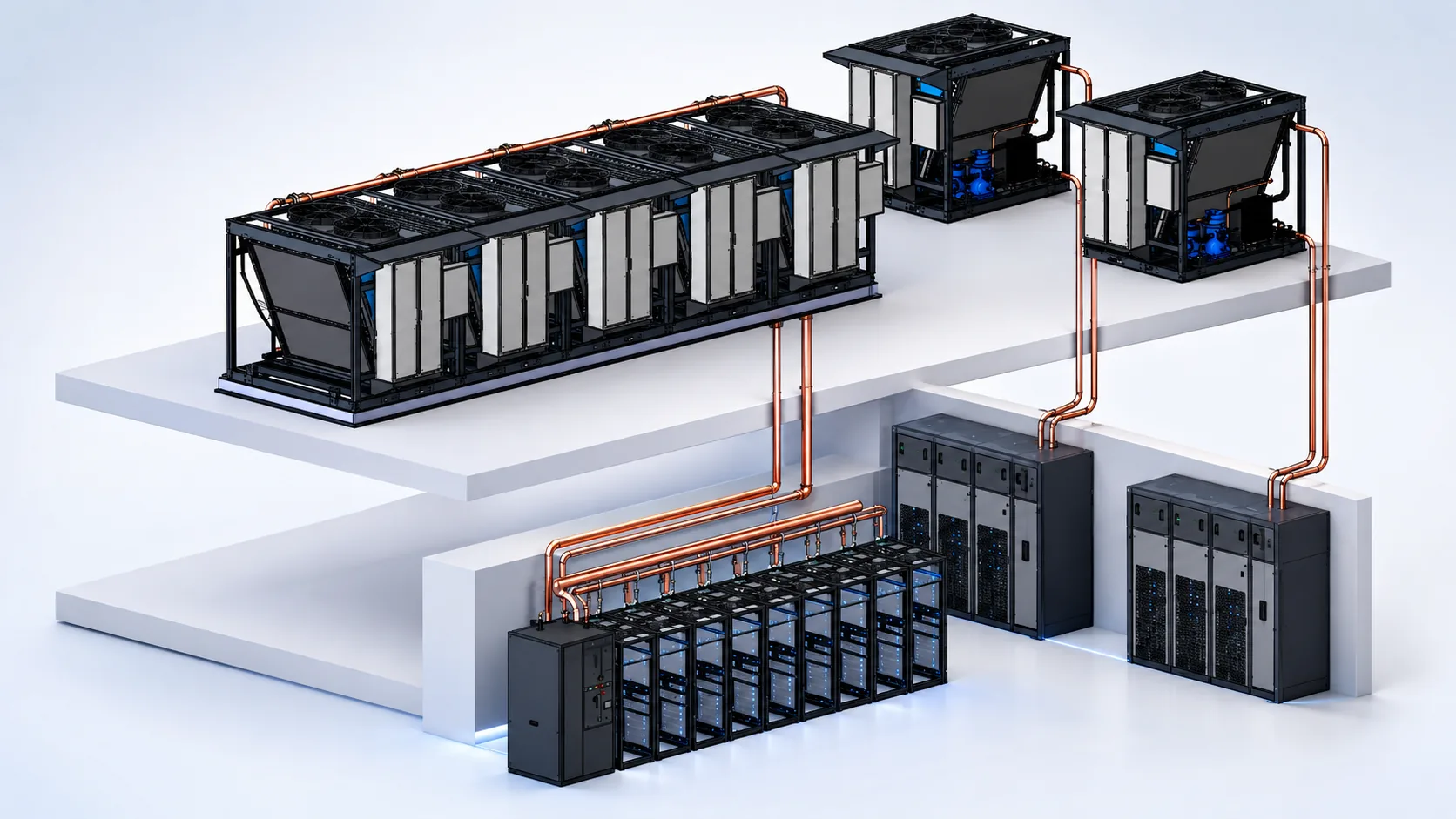
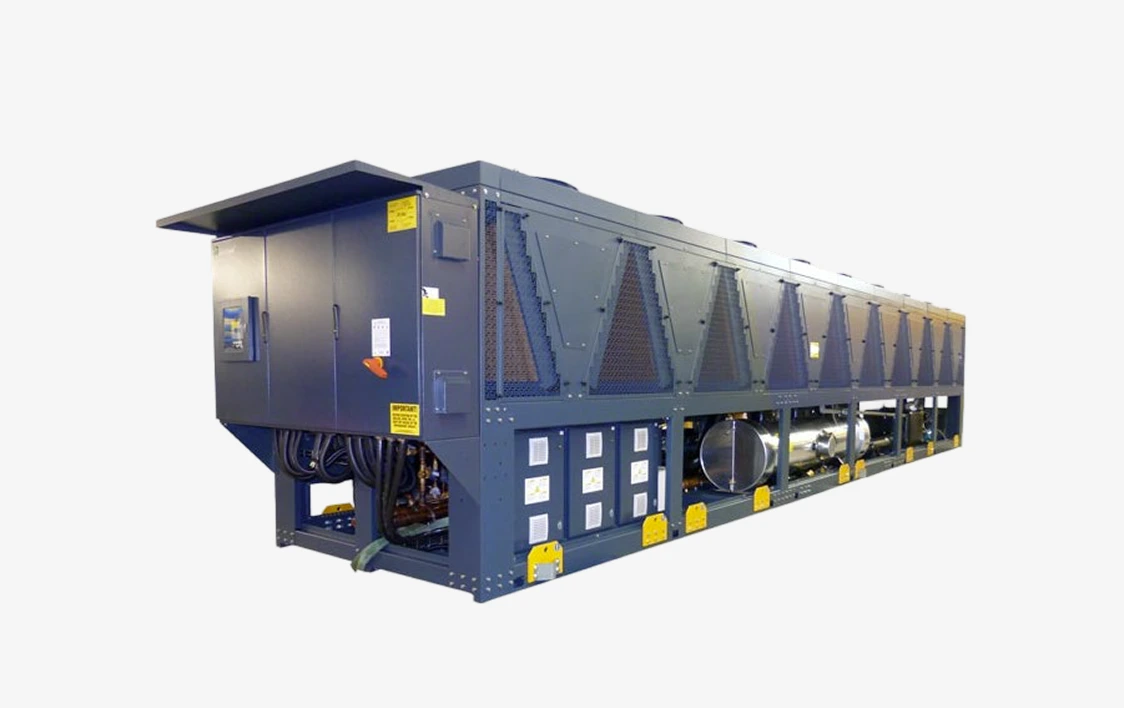
As data centres continue to push toward ever-higher coolant temperatures, the appeal of free cooling is obvious. If waste heat can be rejected directly to the environment, energy-hungry mechanical chillers can be sidelined, cutting both operating costs and carbon emissions. On the surface, aiming for 100% free cooling at the highest possible ambient temperature seems like a no-brainer. But is this strategy always the most energy-efficient path?
To begin with, it’s worth clearing up a common misconception: there is no such thing as truly free cooling. Unless the data centre can simply open its doors and windows and rely on the wind to remove heat evenly from every corner of the white space, a scenario that exists largely in thought experiments, some energy input is always required.
In practice, free cooling usually means rejecting heat from the chilled-water or coolant loop without engaging a traditional refrigerant vapour-compression chiller when the ambient is low enough to permit.
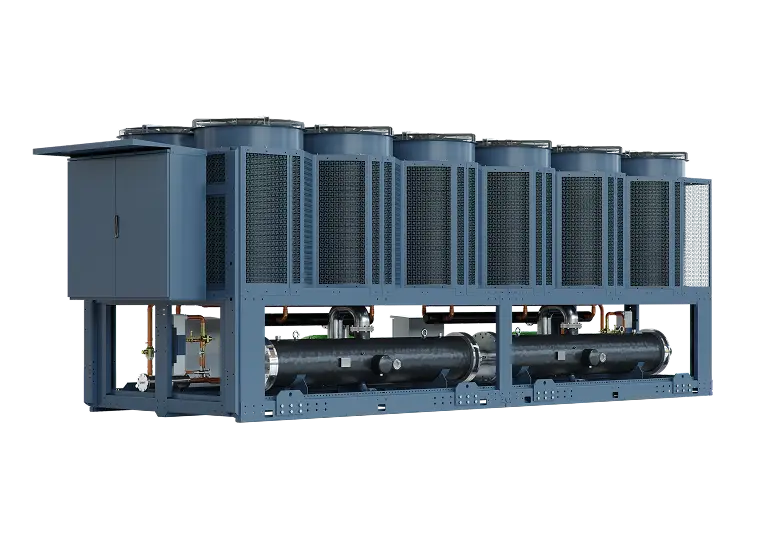
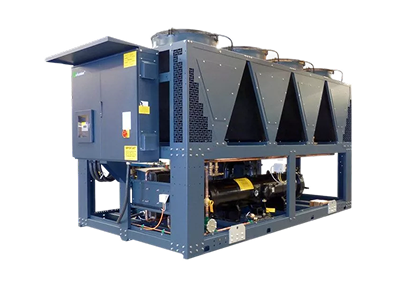
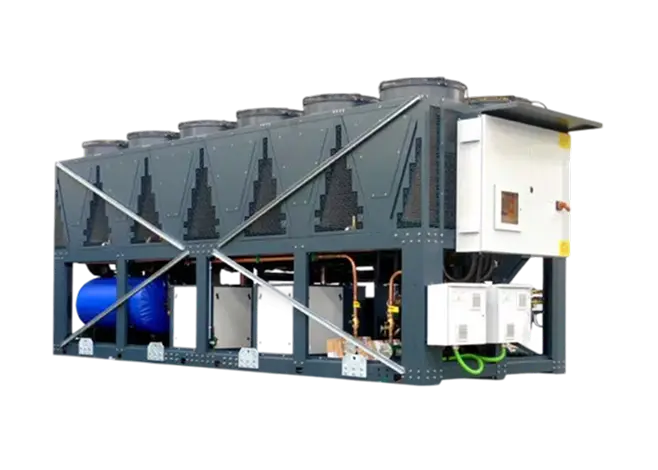
Instead of compressors, the system relies on heat exchangers and fans to transfer thermal energy to the outside air. While this avoids one of the most power-intensive components of a cooling system, it does not eliminate energy use altogether. Fans still need to move large volumes of air across heat-rejection coils, and as the outdoor temperature rises, those fans must work harder and faster to achieve the same effect.
The physics behind this is straightforward. Heat transfer depends on a temperature gradient: thermal energy flows from a warmer medium to a cooler one. The greater the temperature difference, the more readily heat can be exchanged. A cooling fluid that is 10 K warmer than the ambient air will shed heat more efficiently than one that is only 5 K warmer. When ambient temperatures climb and that gradient shrinks, the system must compensate, typically by increasing airflow, which in turn increases fan power consumption, until heat transfer is no longer possible in the right direction.
This highlights a subtle but important point. Designing for the highest possible free-cooling temperature may reduce compressor runtime, but it can also drive-up auxiliary energy use. The result is a trade-off rather than a universal win. Beyond a certain point, chasing “100% free cooling” can yield diminishing returns, or even increase total energy consumption once peak fan power is considered alongside lower compressor input power at lower ambient conditions.
From an energy-efficiency perspective, the real challenge is not achieving free cooling at any cost, but finding the optimal balance between coolant temperature, ambient conditions, and overall system power. Sometimes, a modest amount of mechanical cooling combined with efficient heat rejection may outperform an aggressively high-temperature, fan-heavy free-cooling strategy.
In short, free cooling remains a powerful tool in the data-centre efficiency toolbox—but like all good engineering solutions, it works best when applied with an appreciation of the underlying physics, not just the headline promises of “free.”
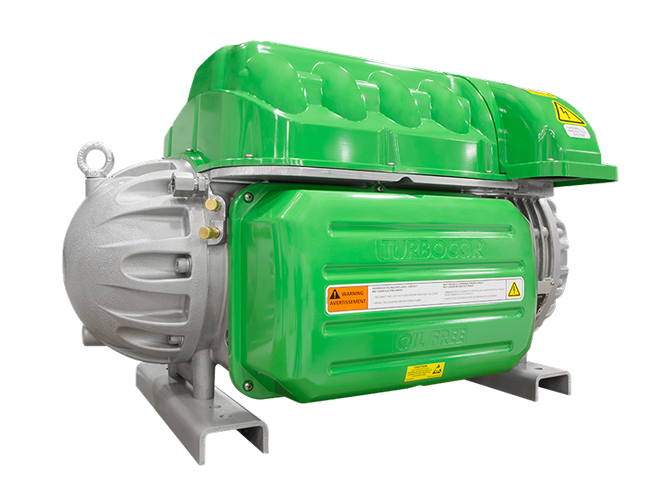
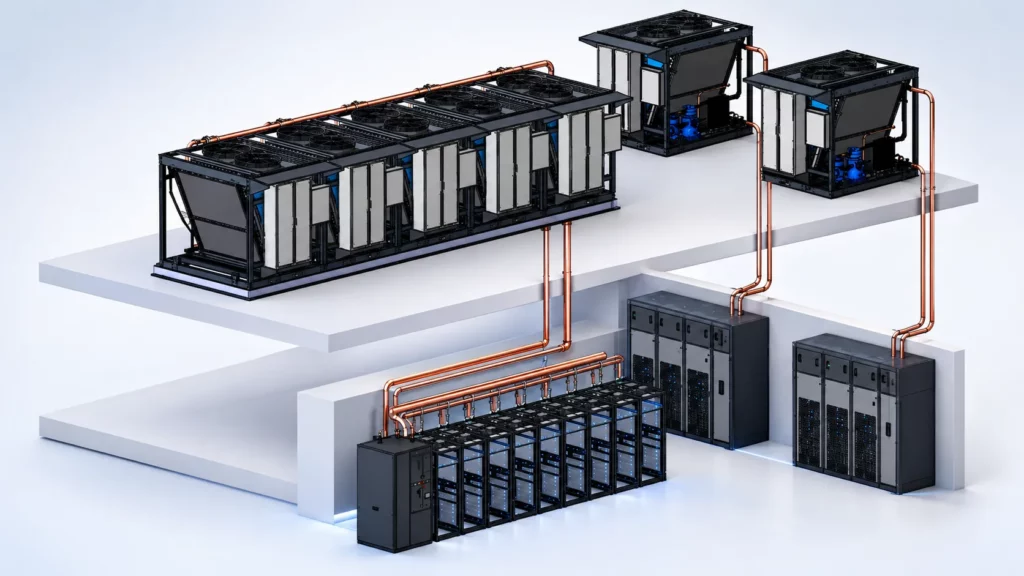
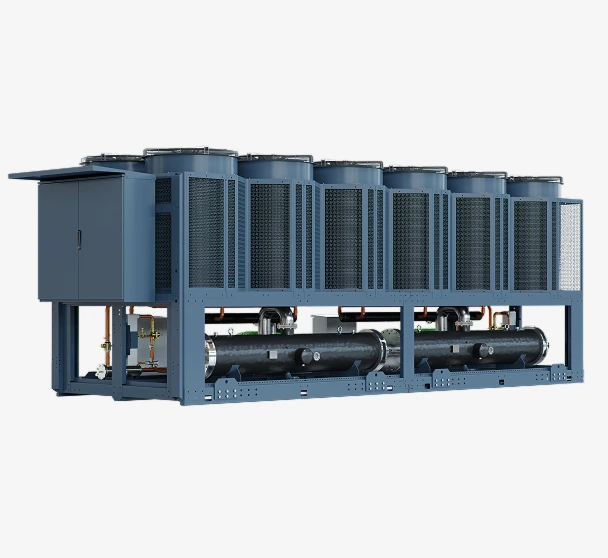
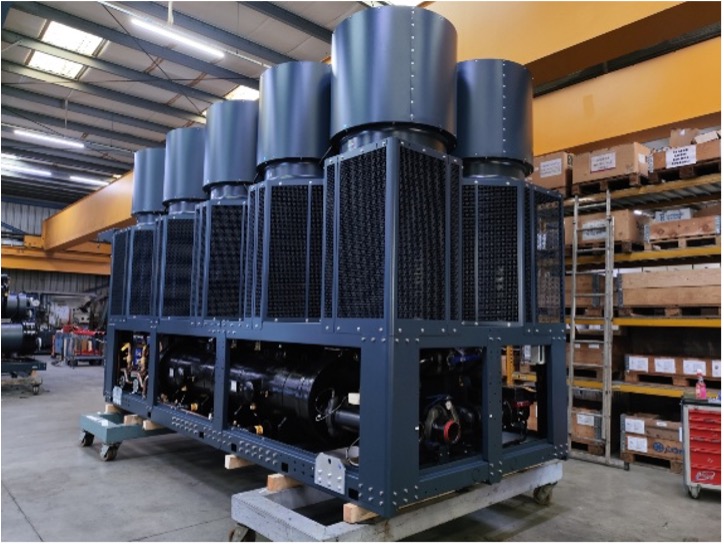
Modern magnetic bearing centrifugal compressor chillers, such as those developed by Munters, are particularly well suited to this challenge.

Their exceptional part-load and sub-peak-ambient efficiency allow the compressors to deliver the required refrigerant mass flow with very low electrical input. Crucially, this can be achieved while elevating the condensing temperature above that of the returning warm fluid from the white space, preserving a favourable temperature gradient. Maintaining this gradient supports effective heat exchange with ambient air and reduces the airflow—and therefore fan power—needed for heat rejection.
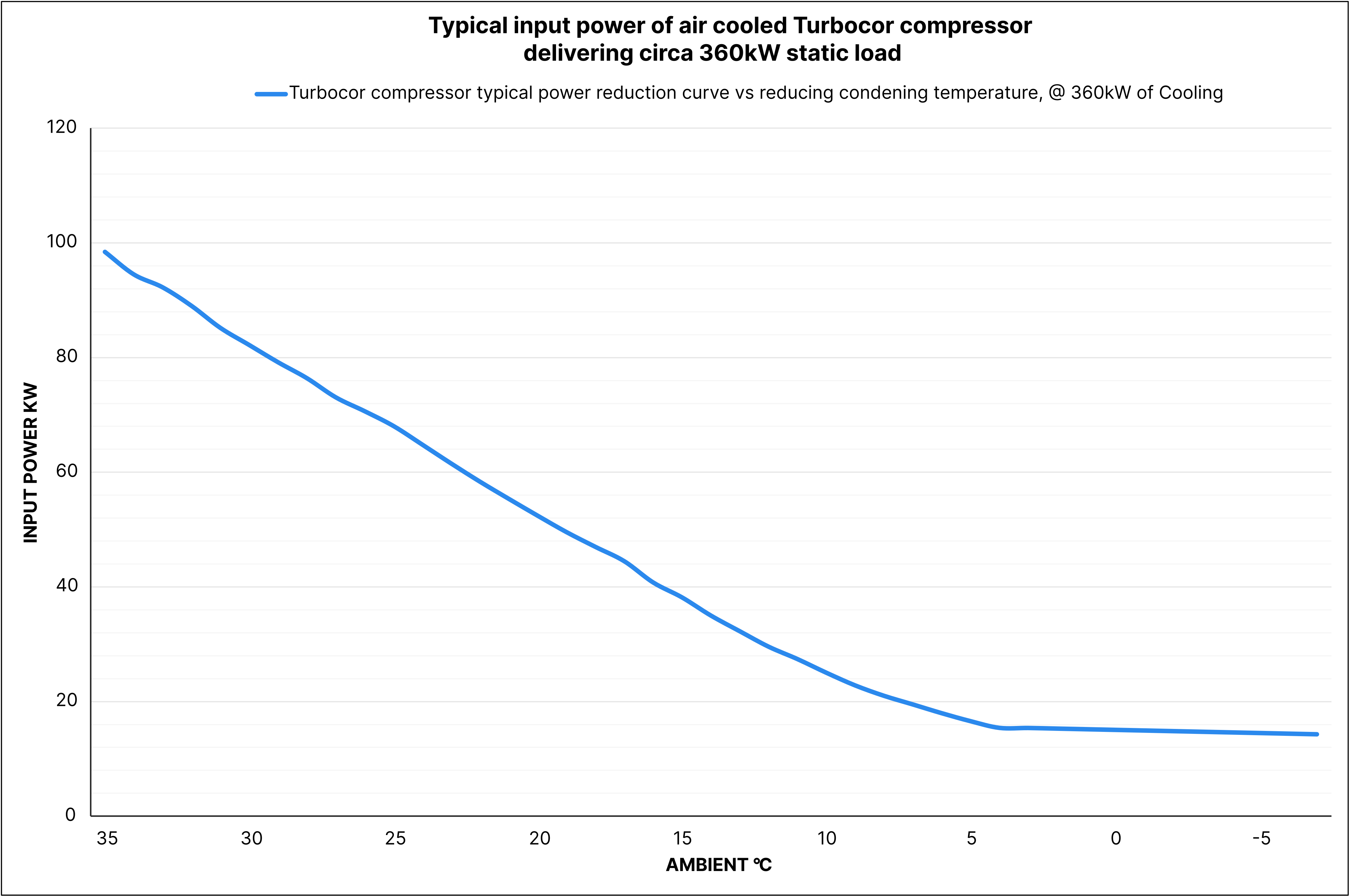
The following graph illustrates the typical compressor input power for a single Turbocor TT310 compressor installed in an air-cooled chiller, as the ambient temperature decreases, while maintaining a stable cooling load of approximately 360 kW.
Fan energy consumption should not be underestimated
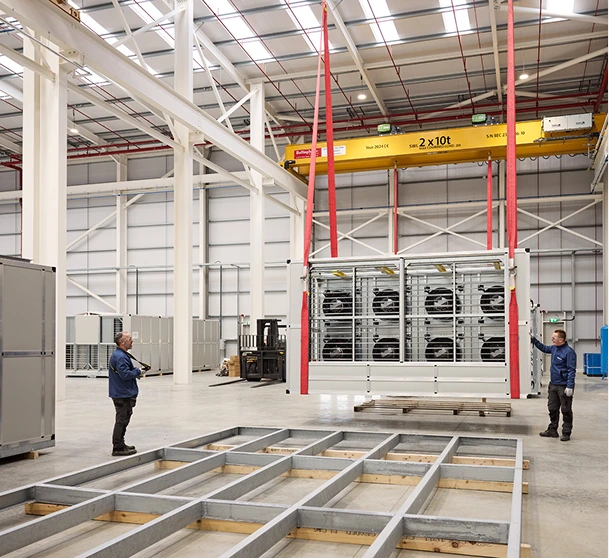
With typical “free-cooling” air-cooled chillers now offering cooling capacities of around 2.0 MW, each unit incorporates many high-power fans. While the widespread adoption of electronically commutated (EC) fans has significantly improved equipment efficiency, their greatest benefit is realised at part load. In accordance with the fan affinity laws, fan power scales approximately with the cube of rotational speed, meaning that even modest reductions in fan speed result in disproportionately large reductions in electrical energy consumption.
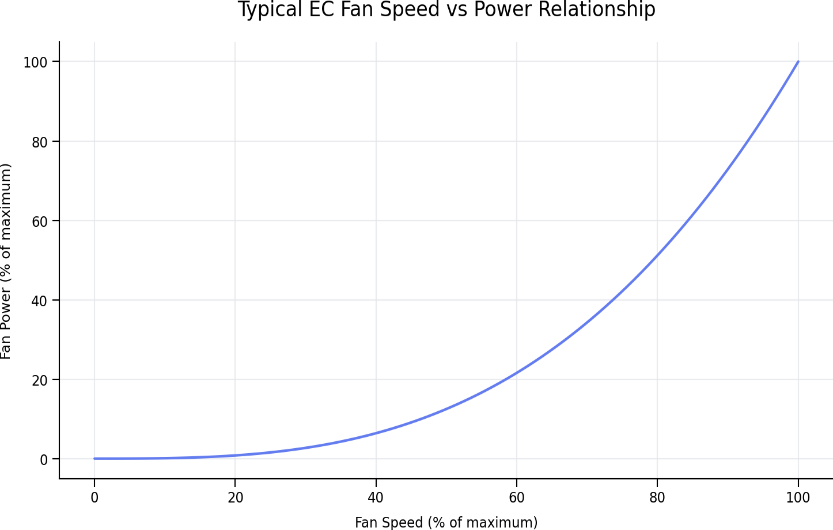
When we chase the goal of 100% free cooling being achieved at as high an ambient as possible the fan energy needed to achieve this provides a spike in total chiller power consumption as the chiller follows a decreasing ambient temperature curve.
At Munters, the free-cooling chiller design is optimised to deliver maximum efficiency across the full operational ambient temperature range. Mechanical cooling is permitted to remain in operation at reduced energy consumption for extended periods, leveraging the lower compressor power requirement relative to peak fan power demand. When this control strategy is applied, full free cooling is achieved at a lower ambient temperature threshold, while the total annual energy consumption across all ambient conditions is reduced compared with achieving full free cooling in a warmer ambient condition. This results in an overall power input profile as illustrated below, with the zone the input energy is saved highlighted in green.
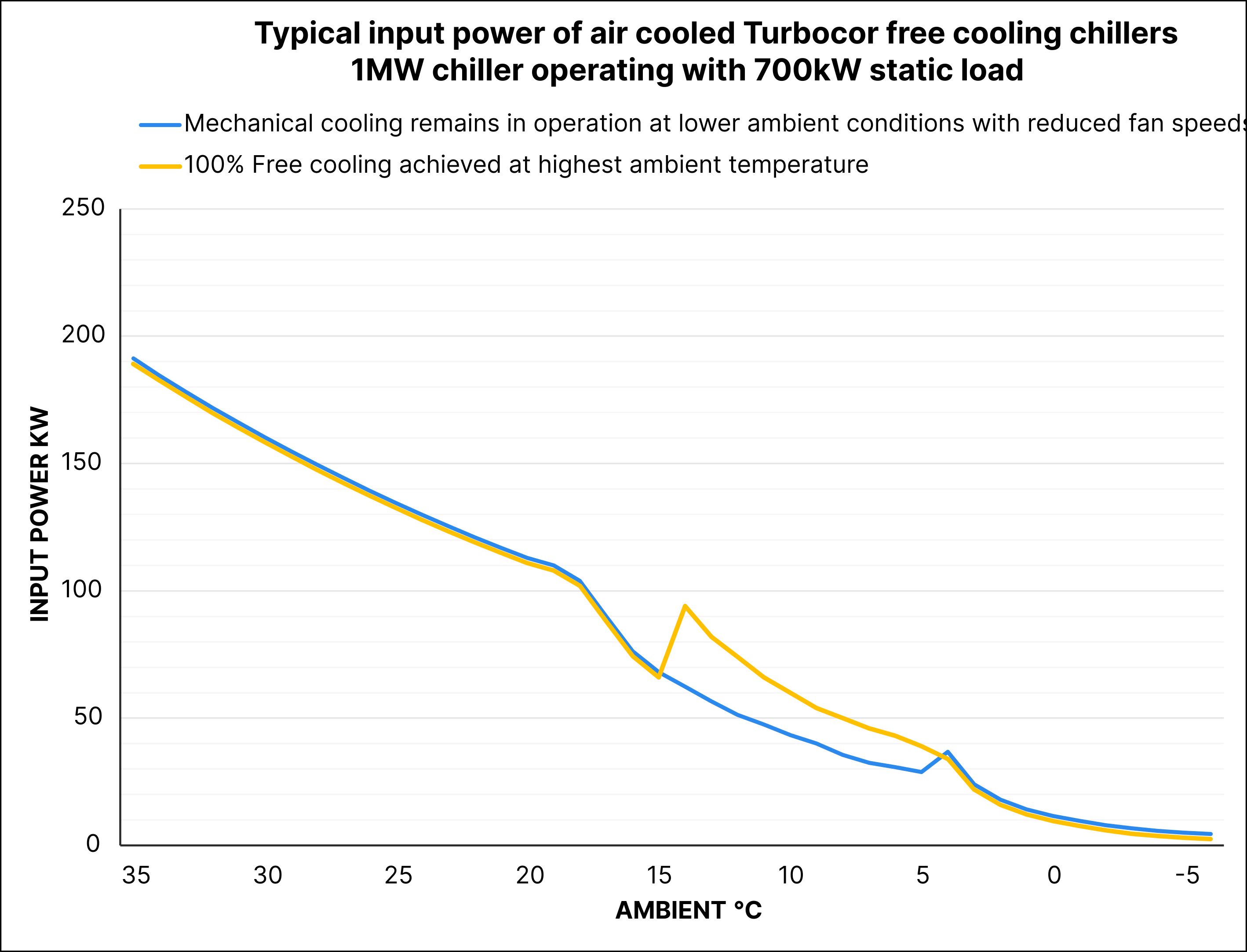
It is important to note that the energy savings associated with this optimisation typically occur within the 15 °C to 5 °C ambient temperature range. In Europe, chillers commonly operate within this range for approximately 40% of the year. As a result, what may initially appear to be a marginal efficiency improvement has a substantial cumulative impact, delivering significant annual energy savings.
Want to explore these cooling topics with your team?
Our CIBSE-approved Data Center Cooling CPD gives consultants and engineers the opportunity to discuss cooling principles, trade-offs and project-relevant questions directly with Munters specialists. Explore the CPD →